Here is how to store olive oil for everyday cooking: keep it tightly closed in a cool, dark cupboard, away from the stove and direct sunlight. Limit its exposure to heat, light and air, and buy an amount you can use while it is fresh.
These recommendations cover plain olive oil, including extra virgin. Flavored and infused oils may have different storage instructions, so follow their labels.
Where to Store Olive Oil
A cool pantry or cupboard away from cooking appliances is a good home for olive oil. Avoid the shelf above the oven, a sunny windowsill and the space beside a hot burner. An opaque container blocks light, but it does not make a warm location suitable for storage.
The main things to manage are:
- Heat: choose a location that stays cool instead of warming up each time you cook.
- Light: keep the container in the dark, even if its packaging already offers some protection.
- Air: replace the cap or stopper promptly after pouring.
- Time: use the oil regularly and choose a bottle size that matches your cooking habits.
There is no need to rearrange your kitchen around one exact temperature. A consistently cool cupboard is a more useful goal than a particular number that is difficult to maintain at home.
Which Containers Work Well for Olive Oil?
Look for a container intended for food use that protects the oil from light and closes securely. The material, closure and storage location work together.
| Container | What to look for | How to use it |
|---|---|---|
| Original dark glass bottle | An intact cap that closes tightly | Keep it in a cupboard and recap after pouring. |
| Food-grade metal tin or stainless steel container | A sound interior and secure closure | Store away from heat and follow the producer’s instructions. |
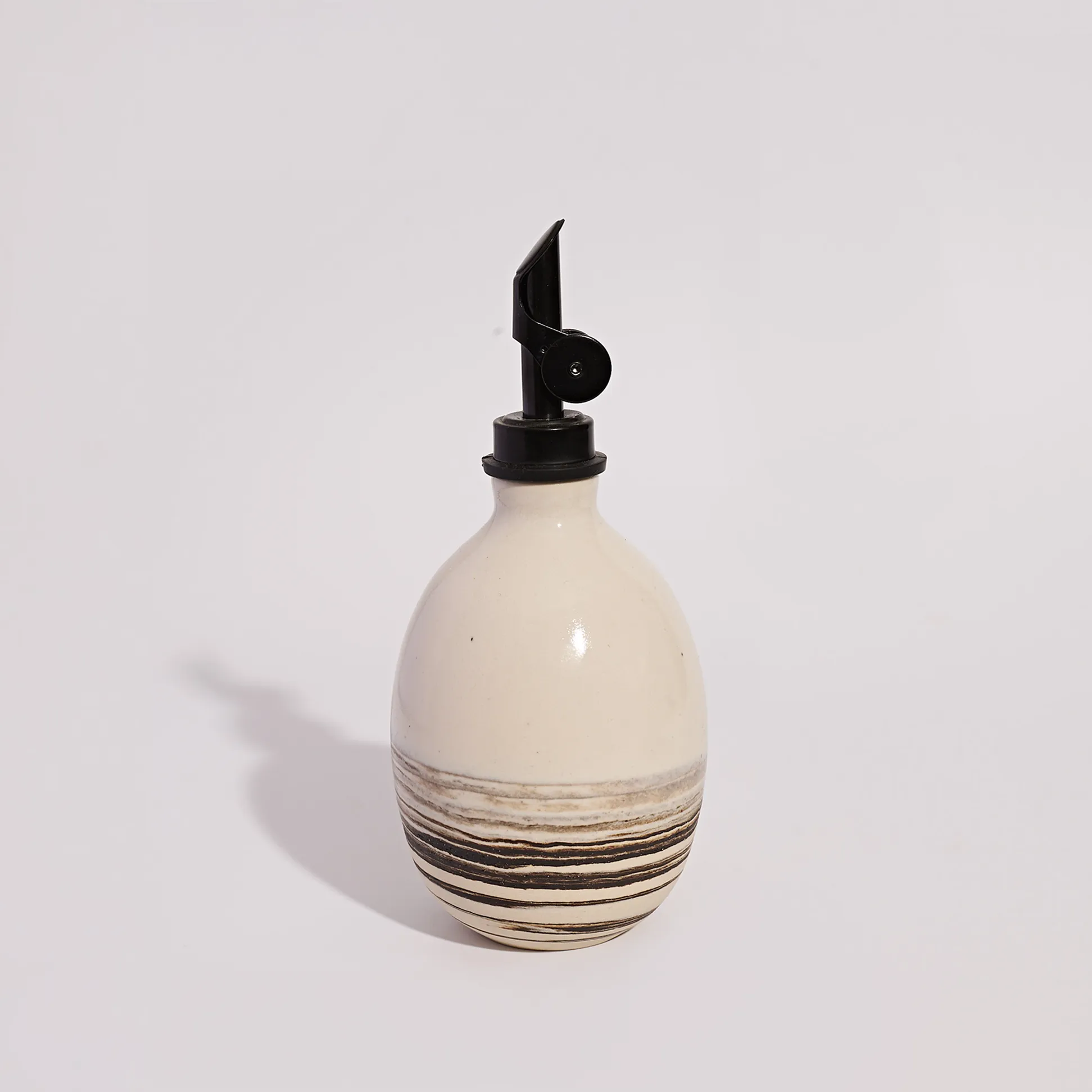
| Ceramic oil pourer intended for food use | An opaque body, suitable interior and a closure you can clean | Use for a modest working amount of oil and store away from heat. Check how well its spout closes. |
| Clear glass bottle | A tight cap and a clean interior | Keep it in a dark cupboard; clear glass does not shield the oil from light. |
You do not need to transfer oil out of a suitable original bottle. Decanting is a choice for serving and pouring convenience, and it introduces additional air exposure. A pour spout is not automatically an airtight seal.
Using a Pourer for Everyday Cooking
If you enjoy using a pourer, fill it with a small working amount and keep the remaining oil tightly capped in its original container. Start with what you expect to use over the next few days, rather than filling a large pourer simply because there is room.
Use a clean, completely dry funnel if needed. Keep track of when you first opened the original bottle: moving the oil into another container does not reset its age.
Close the pourer between uses and return it to a cool cupboard. If its spout cannot close securely, reserve it for serving small amounts and keep the main supply in a tightly capped bottle. Finish the working amount, then clean and dry the pourer before refilling.
Does Olive Oil Go Bad?
Yes. Olive oil gradually oxidizes and can become rancid, losing the flavor and aroma that made it enjoyable. Storage conditions, the oil’s initial quality and the packaging all affect how long it stays fresh.
For an unopened bottle, follow the producer’s best-by date and storage instructions. A harvest date, when available, tells you when the olives were picked; it is different from a bottling or best-by date.
After opening, plan to use the oil within weeks to a few months. For example, California Olive Ranch recommends 30–60 days for its oil. A month or two is a useful buying target for a regularly opened household bottle, rather than a universal expiration deadline.
How to Tell If Olive Oil Has Gone Bad
Smell a little oil in a clean glass. A stale, unpleasant odor resembling old nuts or modeling putty can indicate rancidity. If it smells off, replace it.
Fresh extra virgin olive oil can taste bitter or peppery. Those qualities alone do not mean it has spoiled. UC Davis explains the difference between fresh and rancid aromas, including the fruity and grassy notes fresh oil can have.
Color is not a reliable freshness test: green and golden oils can both be fresh. Cold-induced cloudiness is also different from rancidity.
Should You Refrigerate Olive Oil?
For everyday use, refrigeration is usually unnecessary when you have a cool, dark storage spot. Cold oil may become cloudy, form crystals or solidify; it becomes liquid again as it returns to room temperature.
Refrigeration can help preserve oil that will be kept for longer, according to the North American Olive Oil Association. If you choose that approach, keep the reserve oil consistently cold instead of repeatedly warming and chilling the same bottle. Let the portion you need warm naturally before pouring.
How to Clean an Olive Oil Bottle or Pourer
Clean the bottle or pourer when it is empty, before adding fresh oil. Repeated topping-up leaves older oil and residue behind. Follow the maker’s instructions for the vessel and any separate spout, stopper or seal.
- Empty the vessel. Use up fresh oil before cleaning; discard oil that has gone rancid.
- Separate removable parts. Take off the spout or stopper only if it is designed to come off. Clean those parts according to their own care instructions.
- Wash with warm water and mild dish soap. Swirl the soapy water inside and allow a brief soak if residue needs loosening. Avoid abrupt temperature changes when washing ceramic pieces.
- Reach the inside with a suitable bottle brush. Use soft bristles and a size that fits the neck without forcing it. Work around the base, sides and neck to remove the oily film.
- Rinse thoroughly. Repeat until the soap and loosened residue are gone. If an oily film or stale smell remains, wash again before refilling.
- Allow everything to dry completely. Drain on a clean rack with airflow through the opening. Refill only when the interior, spout and stopper are dry; an overnight wait alone does not guarantee this.
A dishwasher-safe ceramic body does not establish that every attached component is dishwasher safe. For Altar pieces, follow the pottery care guide and any instructions supplied with your pourer.
Altar Stoneware Pourers for the Kitchen and Table
Altar’s oil pourers are made from stoneware by Karina Subijana in Nevada City, California. Their opaque ceramic bodies shield the oil from light; the same rules about heat, closure and regular cleaning still apply.
Compare the Tall Oil Pourer with the Squat Oil Pourer to choose the form you prefer. If you would like to understand the material, the stoneware guide explains how it differs from porcelain and earthenware.
Explore the Altar homeware collection for oil pourers and other pieces for preparing and serving food.



 No products in the cart.